Life has been full these days. Matt and I have 7 kids combined and I haven’t done a full declutter in each room for a couple years!
When I declutter any space in my house, I try to keep the process simple. No complicated systems. No color-coded binders. Believe it or not, I’m not really an organizer kind of person–that’s why I just need less!
Here are a few clear steps that remove the obvious clutter first so you can actually see what’s left.
1. Remove the Trash First
This sounds almost too simple, but it makes a huge difference. Before organizing anything, I walk through the room with a trash bag and remove the obvious stuff:
• envelopes
• old notes
• packaging
• empty folders
• broken pens
• random scraps of paper
You don’t have to think very hard here. If it’s clearly trash, it goes. This step alone can remove more clutter than you expect and gives you quick momentum.
2. Remove the Items That Don’t Belong in the Office
My home office can tend to become a drop zone for things that have nothing to do with work.
Things like:
• kids’ toys
• random mail
• dishes
• items you meant to return somewhere else in the house
Before you start organizing the office itself, walk through and remove anything that belongs in another room. You don’t even have to deal with those items yet. Just put them in a basket and return them to their proper space later.
This clears the room so you’re only working with what actually belongs there.
3. Tackle the Paper
Paper is where my home office can quickly get out of control.
Instead of slowly moving paper around your desk, gather all of it into one pile so you can see exactly how much you’re dealing with.
Then sort it into three simple categories:
Action – things that require a decision, payment, or follow-up
File – documents you truly need to keep
Recycle or Shred – everything else
Most paper falls into that last pile once you really look at it. If you haven’t needed a document in years, chances are it doesn’t need to live on your desk. For papers that do need to stay, keep filing simple. A few labeled folders are usually all you need.
The goal isn’t to create a complicated system — it’s to remove the piles that quietly steal your focus every time you sit down to work.
4. Keep Inspiration, Not Clutter
Your office should still feel personal. But personal doesn’t mean crowded. Instead of filling shelves and surfaces with random decor, I try to keep just a few things that truly mean something. A photo. A meaningful object. Something that reminds me why I do the work I do.
When you limit these pieces, they stand out more. Your eye can actually see them instead of skimming past them in a sea of stuff. And the space starts to feel calmer, clearer, and easier to work in.
A Look Inside My Decluttered Office
After going through those steps, my office didn’t just look better, it felt better.
The desk is clear except for the things I actually use. The drawers aren’t stuffed with random cords and notebooks anymore. And there’s open space that wasn’t there before. That’s one thing I’ve learned over the years with decluttering: the goal isn’t to make a space look perfect. The goal is to make it easier to think, work, and breathe in the room.
So I thought it would be fun to share a little tour of my office so you can see what stayed and what went.
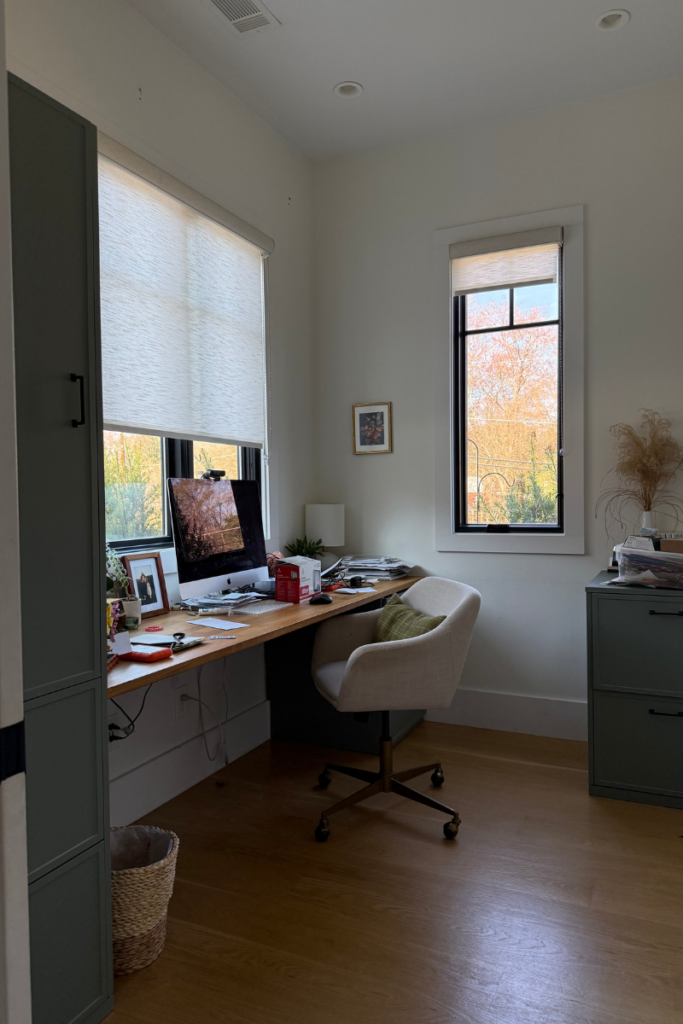
Here is the before. I didn’t have any organization for my desk or in the cabinets so it all just kind of piled up.
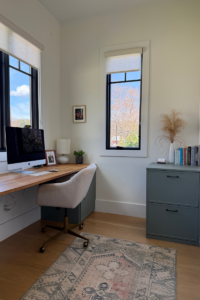
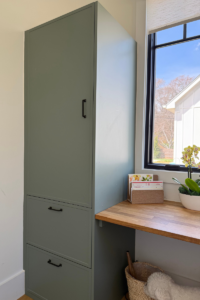
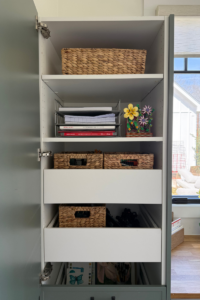
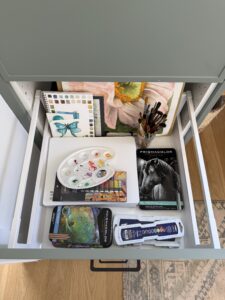
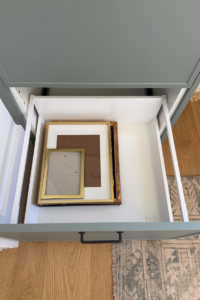
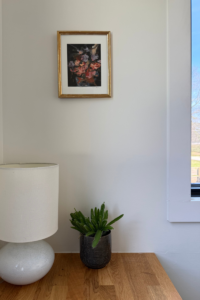
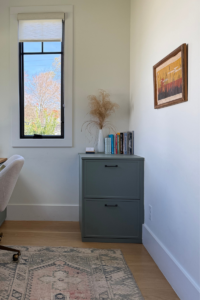
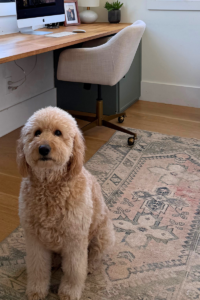
Here is the after…
What I Chose to Keep
As I was decluttering my office, I noticed something interesting. A few of the things I was holding onto weren’t really “office supplies” at all — they were memories.
Old paintings I had done.
Artwork from my kids.
Ideas I had written down during big moments in my life or business.
In the past, I probably would have taken a photo of them because they felt too meaningful to throw away and I just didn’t want to make a permanent decision about it. But over the years i’ve noticed they get lost in my camera role and theres no real story that’s shared about them.
But lately I’ve been doing something different.
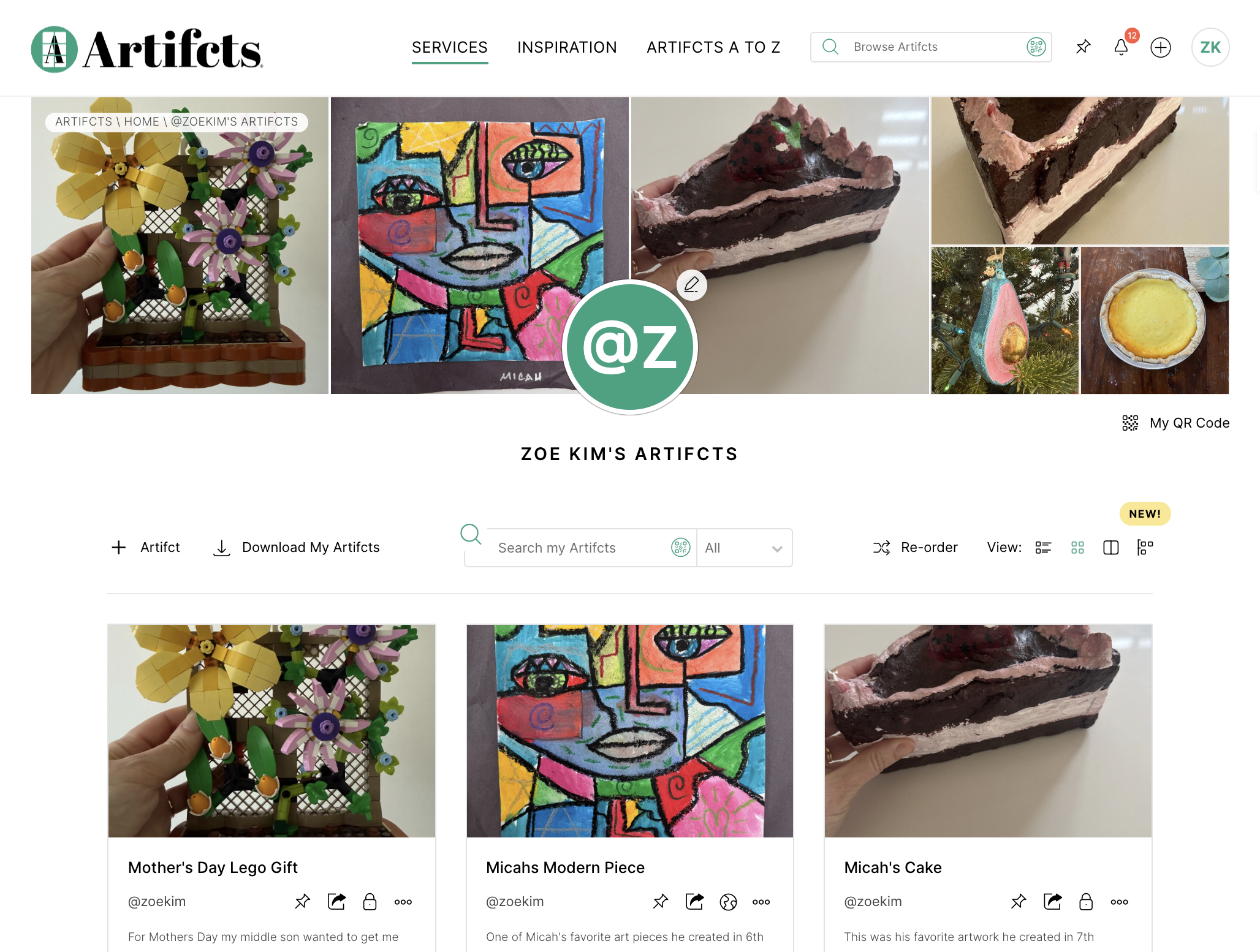
For items that have a story behind them but don’t necessarily need to live in my house forever, I have started photographing them AND saving the memory using Artifcts.
Artifcts is an app that helps you document the story behind meaningful items — so the memory stays even if the object eventually leaves your home. I can add photos, write the story behind the item, leave a voice memo and keep the meaning without keeping the physical clutter.
Here are some of the things I have saved the memories of on my Artifcts account.
You can try Artifcts for FREE here and use code RaisingSimple10 for 10% off with any membership purchase.
It’s become a really helpful middle ground for things that matter but don’t need to take up space in my office anymore.
The meaning stays. The clutter doesn’t.